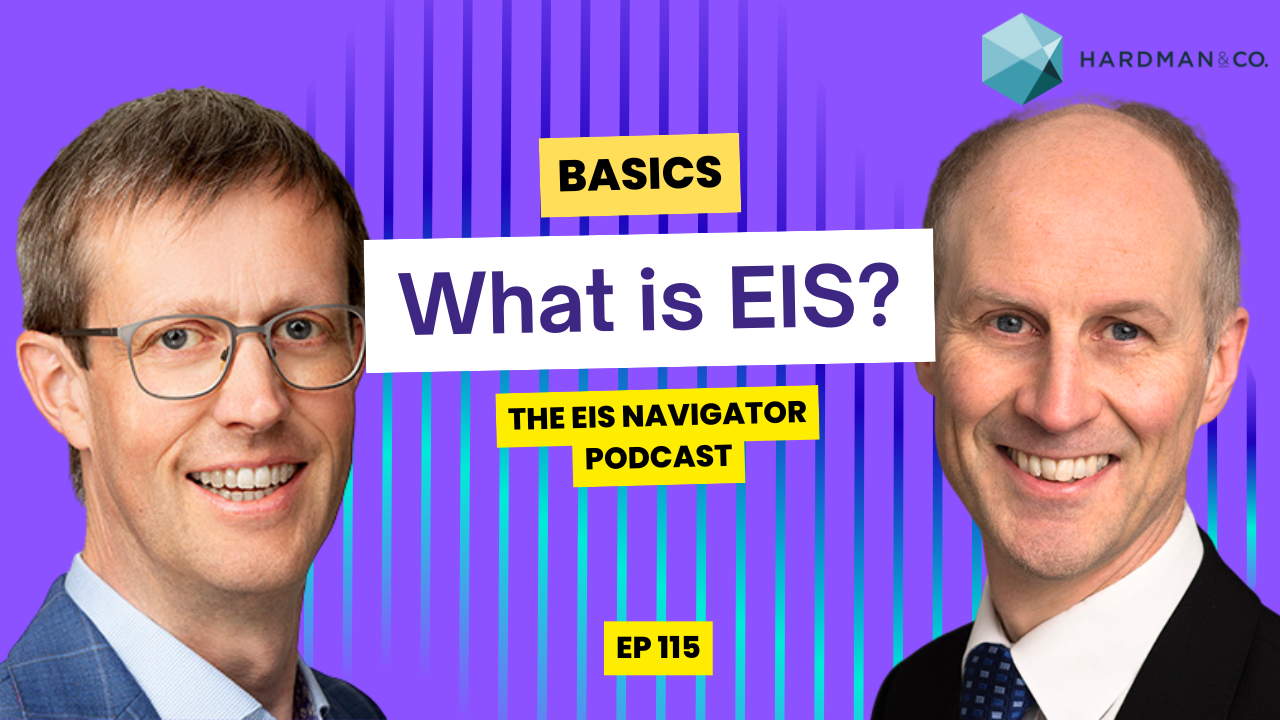
This is the first in a new EIS and VC Basics mini-series for The EIS Navigator.
For our first episode, we have an introduction to the Enterprise Investment Scheme (EIS) with Nic Pillow, Ventures Director at Blackfinch Ventures. He has lots of experience in the industry so is well placed to tell us what it’s all about. You will learn how the scheme works, what types of companies are eligible, the tax reliefs available, and practical steps for investors. This episode also features examples from real investments, making the concepts easier to understand.
In this episode, we cover:
Never miss an episode – click here to subscribe to The EIS Navigator on most popular services.
Learn about the Enterprise Investment Scheme on the HMRC website.
Find out about the tax reliefs for investors using venture capital schemes on the HMRC website.
Check out Blackfinch Ventures website.
Nic Pillow is Ventures Director at Blackfinch Ventures. With over 20 years’ experience in high-growth and technology companies, he has managed over 100 Seed and Series A investments, launched the Blackfinch Spring VCT, and served as a board observer for multiple portfolio companies. Nic co-founded a SaaS startup and previously led global teams at Nokia and other tech firms.
Q: What is the Enterprise Investment Scheme (EIS)?
The EIS is a UK government programme that encourages investment in early-stage, high-growth companies through tax reliefs. It helps innovative businesses raise funding while giving investors exposure to a higher-risk asset class.
Q: Who can invest in EIS?
Eligible investors include individuals seeking exposure to early-stage companies. Investment can be direct, through angel syndicates, or via EIS-focused funds.
Q: How long should I hold an EIS investment?
Investors typically plan for 3–7 years to retain tax reliefs and benefit from potential company exits.
Q: What is a knowledge-intensive company?
A knowledge-intensive company is one that generates value primarily from intellectual property or technology development. These companies may qualify for enhanced EIS conditions.
Q: How do I verify if a company is eligible for EIS?
Advance Assurance from HMRC confirms eligibility before investment. It’s recommended to check this to ensure tax reliefs can be claimed.
Please email [email protected] if you have any questions or comments on The EIS Navigator.
Please note this podcast/interview does not constitute a financial promotion and is provided for informational purposes and should not be construed as an invitation or offer to buy or sell any investments. Please be aware that investments into unquoted companies are high risk, long term and illiquid investments. Your capital is at risk. Past performance is not a reliable indicator of future performance. Target returns are not guaranteed and forward looking statements are illustrative only and must not be relied upon. Investors should only invest on the basis of reading the full offer documentation. Listeners must make their own independent decisions and obtain their own independent advice regarding any information, projects, securities, tax treatment or financial instruments mentioned herein.