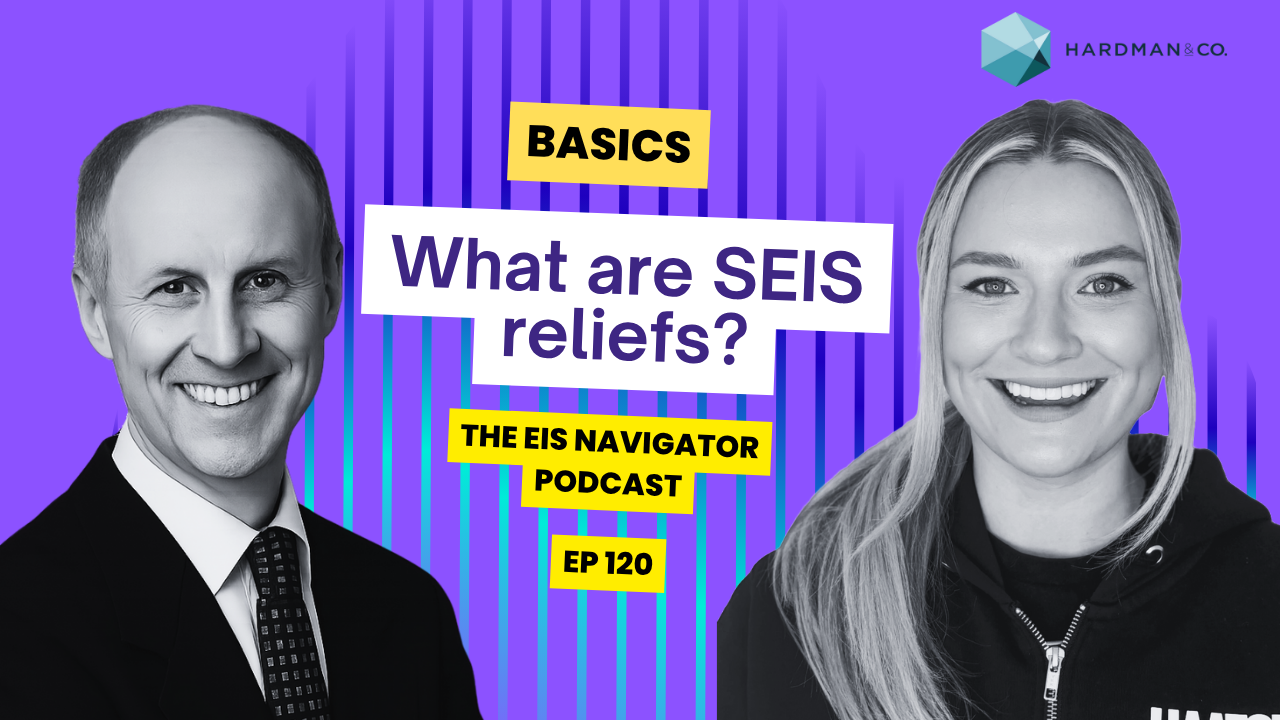
In the latest episode of the EIS and VC Basics mini-series for The EIS Navigator, we discuss the tax reliefs for the Seed Enterprise Investment Scheme (SEIS). Despite only launching its first SEIS fund a few years ago, Haatch Ventures has been successful in attracting funds and, now, getting exits. Director Olivia Drinnan joins the podcast to explain everything.
Olivia covers all the tax reliefs for SEIS, how they work and how they link together.
The topics we cover in the discussion include:
As well as explaining the reliefs, Olivia gives lots of examples to make things really clear. Enjoy!
Never miss an episode – click here to subscribe to The EIS Navigator on most popular services.
Learn about the SEIS scheme on the HMRC website.
Read about the tax relief schemes for venture trusts on the HMRC website.
Check out Haatch Ventures website.
Olivia Drinnan is Director and Advisor Fundraising for Haatch Ventures. She is a well-known SEIS/EIS expert and has trained financial advisors across the UK, helping them navigate tax-efficient investment opportunities for their clients. As the key contact for financial advisors at Haatch, she provides expert guidance on how to recommend Seed Enterprise Investment Scheme (SEIS) and Enterprise Investment Scheme (EIS) investments, enabling clients to maximise tax reliefs and benefit from potential returns. Olivia works closely with advisors through one-on-one discussions, webinars, and industry insights, offering tailored support.
Q: What is SEIS?
The Seed Enterprise Investment Scheme (SEIS) is a government initiative designed to encourage investment in very early-stage UK companies by offering generous tax reliefs.
Q: How much income tax relief can investors claim?
Investors can claim 50% income tax relief on the amount invested. For example, investing £10,000 means £5,000 can be reclaimed through income tax relief, effectively halving the cost of investment.
Q: Are there limits on how much I can invest?
Yes. The maximum SEIS investment is £200,000 per tax year, equating to up to £100,000 in income tax relief.
Q: Can I carry back my SEIS investment to a previous tax year?
Yes. You can “carry back” all or part of your investment to the previous tax year (within the £200,000 annual limit). This means you could invest £400,000 in one go and claim relief across two years.
Q: What is capital gains reinvestment relief?
If you reinvest gains from the sale of another asset into SEIS shares, half of that gain becomes exempt from Capital Gains Tax (CGT). The remaining 50% is still taxable, but this can substantially cut your CGT bill.
Q: Are gains on SEIS shares tax-free when I sell?
Yes. If the investment is held for at least three years, any profits made on sale are completely exempt from CGT.
Q: What happens if the business fails?
Investors can claim loss relief on the amount still at risk after income tax relief. For a 45% taxpayer, that can mean recovering another 22.5%, reducing the maximum loss to around 30% of the original investment. Combined with other reliefs, up to 70%–80% of capital can be protected even in a total loss.
Q: Do SEIS investments pay dividends?
Usually not. Early-stage companies typically reinvest profits into growth rather than paying dividends. The main potential returns come from capital gains on exits.
Q: Is SEIS eligible for inheritance tax (IHT) relief?
Yes. SEIS shares qualify for 100% Business Relief after two years, meaning they can be passed on free of IHT. From April 2026, the first £1 million of Business Relief assets will receive 100% relief, and assets above that level will receive 50% relief.
Q: How can SEIS help with pension planning?
Investors can use SEIS to withdraw money from pensions tax-efficiently: pension withdrawals are offset by SEIS income tax relief, and after two years the investment may become IHT-free — potentially a powerful estate-planning tool.
Please note this podcast/interview does not constitute a financial promotion and is provided for informational purposes and should not be construed as an invitation or offer to buy or sell any investments. Please be aware that investments into unquoted companies are high risk, long term and illiquid investments. Your capital is at risk. Past performance is not a reliable indicator of future performance. Target returns are not guaranteed and forward looking statements are illustrative only and must not be relied upon. Investors should only invest on the basis of reading the full offer documentation. Listeners must make their own independent decisions and obtain their own independent advice regarding any information, projects, securities, tax treatment or financial instruments mentioned herein.