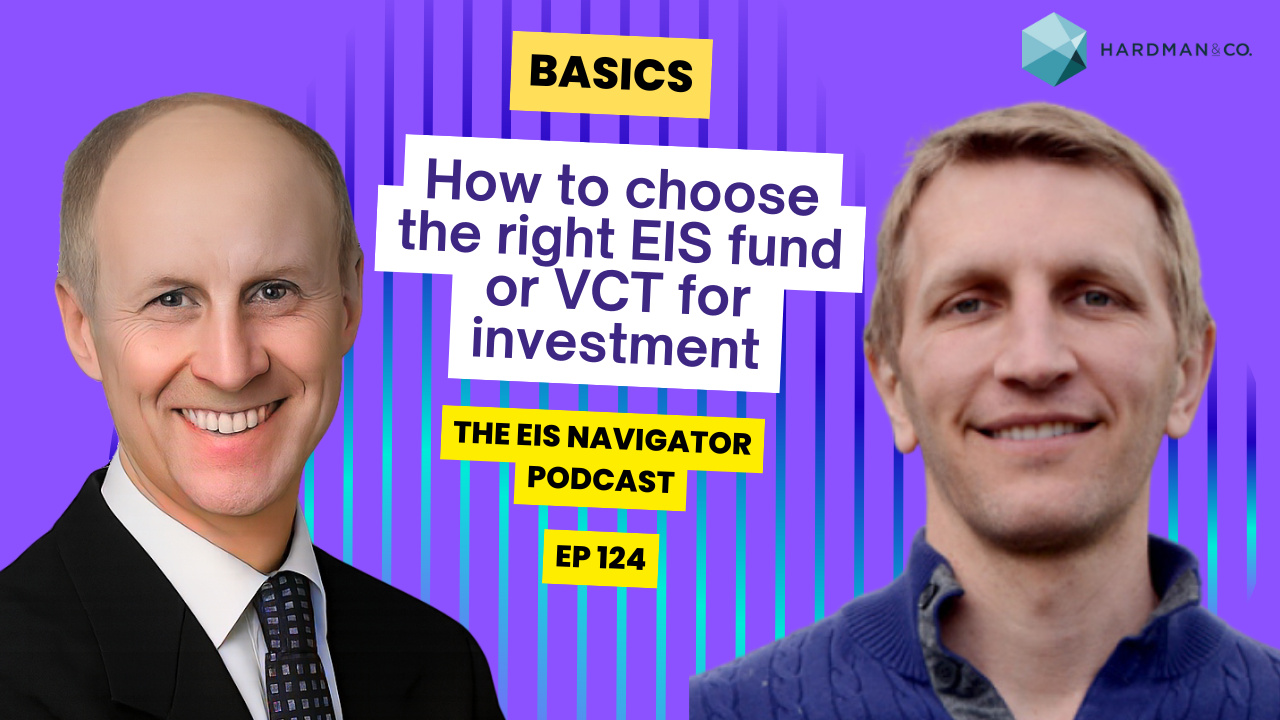
In the latest episode of the EIS and VC Basics mini-series for The EIS Navigator, we discuss how investors and advisers can pick the right EIS fund or VCT. SyndicateRoom has moved into third-party management, so has good insight into how to pick a fund. Co-founder Tom Britton joins us to give his views on what investors need to look at and how.
Tom covers lots of areas that investors and advisers need to consider. These include:
It can seem daunting to a founder who is new to fundraising, but with a little guidance they can manage an effective process without making it too complicated. Enjoy!
Never miss an episode – click here to subscribe to The EIS Navigator on most popular services.
Read about the tax relief schemes for venture trusts on the HMRC website.
Check out the Syndicate Room website.
Contact Tom Britton by email: [email protected]
After completing his MBA in Cambridge, Tom co-founded SyndicateRoom to give a wider audience access to venture capital investment. As Co-founder, Tom works across all aspects of the business, with an emphasis on product development and marketing strategy, and as much direct contact with super angels and investors as possible. He enjoys being plugged into the wider industry and sits on the board of the UK Business Angel Association. He also hosts SyndicateRoom’s Angel Insights podcast, interviewing key industry figures. Prior to founding SyndicateRoom, Tom was Product Manager at TheTrainline, where he headed up the launch of its mobile applications.
Q: What are the high-level filters investors should use when shortlisting EIS funds or VCTs?
Q: How should investors think about diversification within their venture allocation?
Research suggests investors should ultimately build towards around 150 venture holdings to reduce the impact of the power law. Since most EIS funds only invest in beteween six and ten companies per year, investors need to contribute steadily over several years, potentially across multiple funds annually.
Q: Should investors avoid concentrating too heavily in one sector?
Yes. Venture has noticeable cycles (AI, big data, cyber security, consumer tech, etc.). Overexposure to a single trend risks poor outcomes when that cycle cools. Sector diversification is key.
Q: How should past performance be assessed?
While past performance doesn’t guarantee future results, Tom recommends looking for:
Q: How relevant are exits when judging a manager’s performance?
Exits matter but IPOs and acquisitions have slowed significantly in the past two to three years. Venture timelines are stretching from seven years to 10+ years. Therefore, investors should also look at portfolio companies’ follow-on rounds and whether new, reputable investors are leading later rounds. This signals strong company progress even without exits.
Q: What deeper due diligence should investors do once they have a shortlist?
Q: How should investors think about fund manager stability and staffing?
Some movement of analysts is normal, but investors should want a degree of stability in the senior leadership and evidence that the team can consistently attract strong deal flow.
Q: What fees should investors pay attention to in EIS funds and VCTs?
Fees tend to be higher and more complex than mainstream funds. Key points include:
Q: How does carry (performance fee) work?
Carry is the share of returns a manager takes after a certain threshold. It can be charged: deal-by-deal, or on the entire portfolio (after the investor’s original capital has been returned). Many funds include a hurdle rate, meaning performance fees only apply above a certain return level.
Q: Why is understanding fee structure important for tax relief?
Income tax relief applies only to the amount invested into companies, not the total subscription. If fees are deducted upfront (e.g., 2% set up + 2% annually for three years), investors may only receive tax relief on about 92% of their subscription.
Q: What are the implications of managers charging fees to the investee companies instead of investors?
Charging companies can preserve investor tax relief. However, companies may demand a higher valuation to compensate, reducing investor upside. Good companies may avoid managers with heavy company-level fees, hurting deal quality.
Q: What additional factors apply specifically to VCTs?
Although only mentioned briefly, key VCT-specific considerations typically include:
These should be weighed alongside all the factors relevant to EIS funds.
Please note this podcast/interview does not constitute a financial promotion and is provided for informational purposes and should not be construed as an invitation or offer to buy or sell any investments. Please be aware that investments into unquoted companies are high risk, long term and illiquid investments. Your capital is at risk. Past performance is not a reliable indicator of future performance. Target returns are not guaranteed and forward looking statements are illustrative only and must not be relied upon. Investors should only invest on the basis of reading the full offer documentation. Listeners must make their own independent decisions and obtain their own independent advice regarding any information, projects, securities, tax treatment or financial instruments mentioned herein.