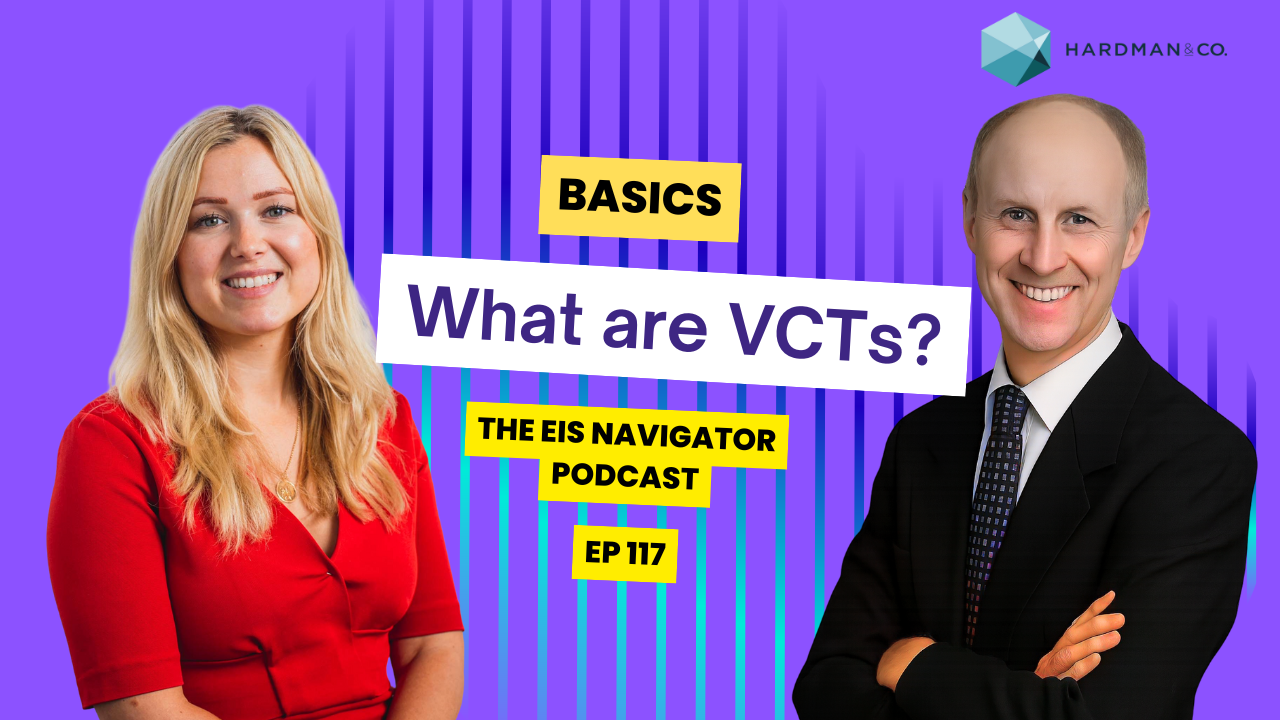
In the third of the EIS and VC Basics mini-series for The EIS Navigator, we introduce Venture Capital Trusts (VCTs). Foresight Group manages four VCTs, so we asked Nel Isaac, Senior Strategic Partnerships Manager, to come on and explain what they are about. VCTs are the most popular of the tax advantaged schemes, so it’s great to get someone with such deep knowledge to give us a primer.
The areas we cover in the discussion include:
As well as explaining the reliefs, Nel brings in lots of examples. Enjoy!
Never miss an episode – click here to subscribe to The EIS Navigator on most popular services.
Learn about Venture Capital Trusts on the HMRC website.
Read about tax reliefs for venture schemes on the HMRC website.
Check out the Foresight Group website.
Contact Nel Isaac on LinkedIn.
Nel Isaac is a Senior Strategic Partnerships Manager at Foresight, based in London. Nel has been with the business for 10 years and is currently responsible for managing relationships with key networks and national advice firms across the UK. Nel holds a BSc in Anthropology from the University of Southampton and the Investment Management Certificate (IMC) qualification part one.
Q: What is a VCT?
A Venture Capital Trust (VCT) is a company listed on the London Stock Exchange that invests in a portfolio of small, early-stage UK businesses. VCTs were introduced by the government in 1995 to encourage investment in high-growth companies by offering tax incentives to investors.
Q: Why were VCTs created?
The government launched VCTs to help fund smaller, high-growth businesses that often find it difficult to access traditional finance. By offering tax reliefs to investors, VCTs channel private capital into these businesses, supporting their growth and contributing to the UK economy.
Q: What kinds of companies do VCTs invest in?
VCTs mainly invest in “qualifying holdings”, which are typically: UK-based, unquoted companies (or listed on AIM but not the main market); Companies with gross assets below £15 million before investment and £16 million immediately after; Businesses with fewer than 250 full-time employees; Companies trading for less than 7 years (or 10 years if they are knowledge-intensive). At least 80% of a VCT’s assets must be invested in qualifying holdings. The remaining 20% can be held in cash or other liquid assets to manage day-to-day operations and liquidity.
Q: How much can a VCT invest in a single company? There are three main types:
Q: How do VCT managers build their portfolios? Common strategies include:
Older strategies, such as funding management buyouts, are now largely phased out following rule changes in 2015.
Q: How do VCTs differ from EIS funds? Investors can buy VCT shares in three ways:
Q: How do investors make money from VCTs? Investors can benefit in two ways:
Q: How can investors sell their VCT shares?
There is a limited secondary market for VCT shares because they don’t come with tax reliefs when bought second-hand. Instead, most VCTs offer a buyback facility, where they repurchase shares from investors at a small discount to net asset value (typically 5–10%). Buybacks usually take place during open periods and depend on the VCT having sufficient cash. Although not guaranteed, buybacks are a standard way for investors to exit their investments.
Please email [email protected] if you have any questions or comments on The EIS Navigator.
Please note this podcast/interview does not constitute a financial promotion and is provided for informational purposes and should not be construed as an invitation or offer to buy or sell any investments. Please be aware that investments into unquoted companies are high risk, long term and illiquid investments. Your capital is at risk. Past performance is not a reliable indicator of future performance. Target returns are not guaranteed and forward looking statements are illustrative only and must not be relied upon. Investors should only invest on the basis of reading the full offer documentation. Listeners must make their own independent decisions and obtain their own independent advice regarding any information, projects, securities, tax treatment or financial instruments mentioned herein.