The rate of unemployment in the UK seemed to disappear from the headlines for many years. However, it looks to have crept up the news agenda again in recent months. Unemployment hit 5.2% early in 2026, the highest rate for five years. The latest data may show the headline figure contracting slightly, but it is the trend that is concerning.
This paper aims to help investors to understand:
Unemployment can have a corrosive impact on everyone. Even those in employment are affected as governments respond to fiscal pressures by putting up taxes and cutting expenditure on non-welfare areas.
Unemployment undermines confidence, blights people’s life chances and corrodes society. Many recent government initiatives mean well but do not end up doing good. Indeed, they may be exacerbating the problem rather than curing it.
The rate of unemployment in the UK seemed to disappear from the headlines for many years. However, it seems to have crept up the news agenda again in recent months, with the rate hitting 5.2% in early 2026, the highest for five years.
Let us put this into context. The rate today is still low compared with many periods in the past. The worry is not only that it is the highest for a while but also that it looks to be heading higher. We are clearly not talking the heights seen in the Thatcher era, when, in 1982, the rate hit 11.9%. Nor are we anywhere near the 22% reached in 1932 during the Great Depression.
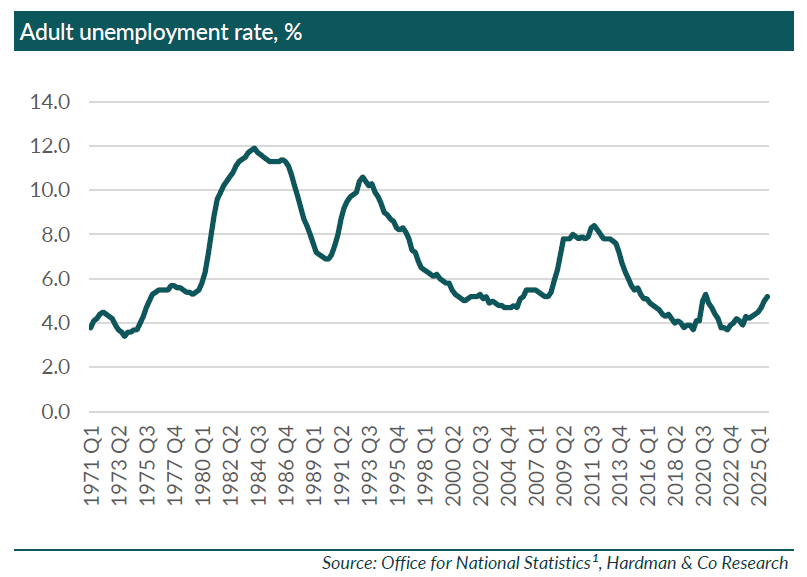
The Office for National Statistics’ (ONS) “Labour market overview”, looking at the three months to February 2026, showed a slight downtick to 4.9%. However, this seems to be explained by an uptick in those not actively seeking work (and, therefore, excluded from the unemployment count), effectively giving up!
The same ONS report highlights worrying data about job vacancies. For the period between January 2026 and March 2026, vacancies reached their lowest level in almost five years, at only 711,000.
[1] Office for National Statistics, Labour Force Survey, 19 March 2026. “Adult” is defined as over 16 years old.
Download the full report