Part 3 of 4 The SaaSpocalypse Series
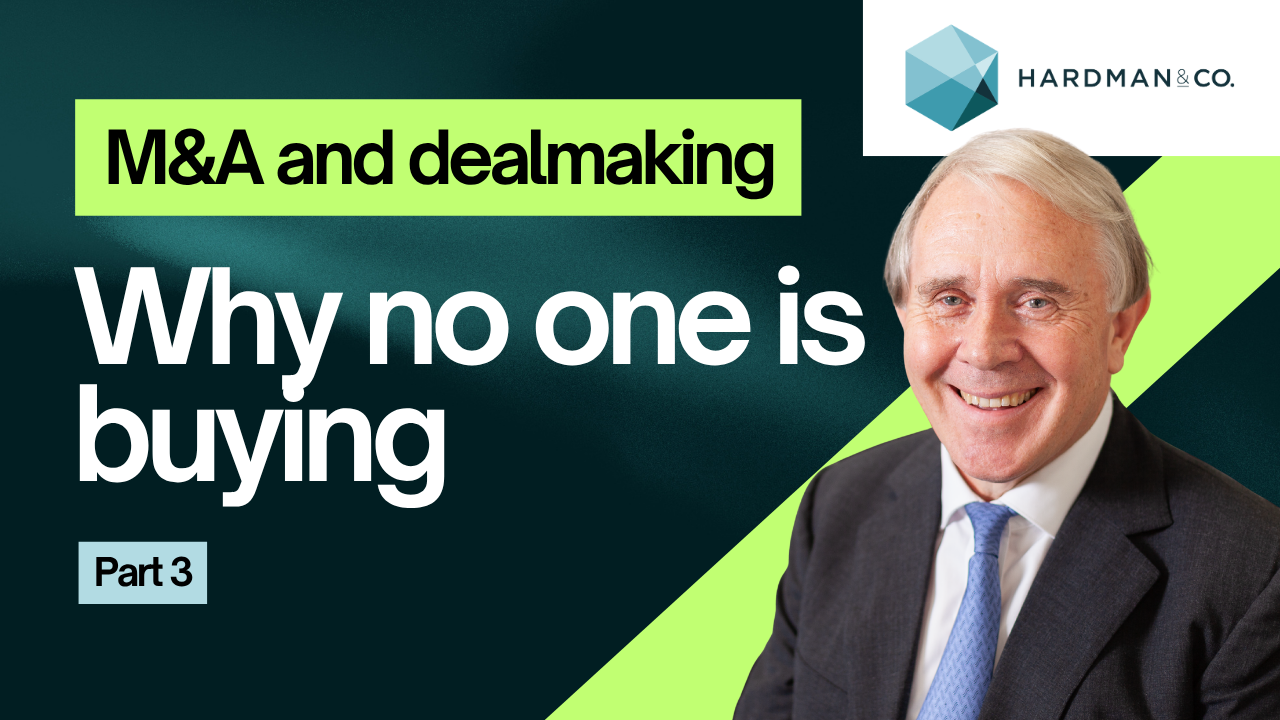
In this Q&A, which forms the third part of this PCV Forum series, Richard Angus from Hardman and Co and Doug Lawson of MarktoMarket discuss M&A markets right now, including one counterintuitive finding: why strategic buyers are, in some parts of the market, paying less than private equity.
The software M&A market remains active, but buyers are becoming increasingly cautious as AI transforms the technology landscape.
While M&A activity remains strong, transaction timelines are becoming more extended. Buyers are conducting more extensive due diligence than ever before, with reviews now covering cyber security, operational risk, management teams and technology infrastructure alongside traditional financial and legal assessments.
However, the biggest factor behind longer deal processes is uncertainty around the future impact of AI. Buyers are finding it increasingly difficult to assess how emerging technologies, particularly large language models (LLMs), could affect software businesses over the coming years. As a result, many investors are seeking additional trading data before committing capital or, in some cases, stepping away from transactions altogether.
For investors considering software acquisitions, understanding future revenue risk has become more challenging. The rapid development of AI technologies means that business models, which appear resilient today, could face significant disruption in the near future. This uncertainty is encouraging buyers to adopt a more cautious approach. Rather than relying solely on historical performance, buyers are taking more time to evaluate how AI could influence customer demand, competitive positioning and long-term growth prospects.
One of the more surprising findings in the current market is that private equity firms are, in some cases, paying higher valuations than strategic buyers. Traditionally, strategic buyers have often been willing to pay a premium because of the synergies they can achieve through acquisitions.
According to Doug, this trend may suggest that some private equity investors are willing to pay more aggressively in order to deploy capital. While strategic buyers remain active, they appear to be taking a more measured approach to valuations in the current environment.
Although software M&A activity continues, the volume of acquisitions being completed by some of the sector’s most acquisitive technology companies has slowed. Compared with other industries, transaction activity in software is progressing at a more cautious pace as buyers assess the implications of AI-led disruption.
The result is a market where deals are still being completed, but investors are demanding greater certainty before committing. As AI continues to reshape the technology sector, understanding future business resilience is becoming just as important as analysing past performance.
Watch Part 1 – Private Company Valuations in 2026: what the TMT deal data is actually telling us
Watch Part 2 – SaaSpocalypse: how AI is reshaping software valuations
Watch Part 4 AIM, PISCES and the UK capital markets problem: what will make investors actually commit?
Larissa Adams (00:00)
Parts One and Two covered the data and the framework. Now, let’s get into the conversation. Richard Angus from Hardman and Co sits down with Doug Lawson from MarktoMarket to go deeper into what practitioners are really dealing with right now. So, why are strategic acquirers in some cases paying less than PE, which is unusual, why are M&A processes stretching out and what does AI uncertainty mean in practice when buyers and sellers are trying to agree a price?
Doug also talks through what a cautious buyer actually does when they can’t model the revenue risk. So, let’s get into the conversation.
Richard Angus (00:38)
Indeed, that was really fantastic. There are a number of questions. Unfortunately, we’ve only got time for a couple of them. One thought is when there’s a lot of deals happening, are they highly competitive? In other words, the market’s deciding because, like selling your house, you get several people interested, or do you find they are mainly private equity companies, as you’ve said, have decided that this is the area they wish to be involved in? And that’s the next step is that the deal is basically done in terms of whether it’s funding and it could be in the case of mergers and acquisitions, whether the two sides get together very quickly because they realize that is going to be the next, the answer for the next three to five years. Or is it like that? Is it active under the surface? I think was what we’re trying to get at.
Doug Lawson (01:23)
Yeah, I think that what’s happening is in terms of the equity raising, you’ve got lots of money being thrown at AI businesses. So, whether that’s the large language models or other people that are using AI to build other applications, got lots of money being thrown at that, and you saw that 81% of the capital is going towards those businesses. So, everything else is missing out. I think it’s slightly different in the M&A markets – it’s more that processes are taking a long time. They’ve been taking a long time for a long time. And that’s really because of due diligence. It’s more due diligence, it’s more types of due diligence. So, rather than just doing the traditional financial and legal DD, we need to do cyber, we need to do risk, we need to do management, etc. Lots more DD being done. But I think the other thing at the moment, which is a very live issue, is the AI impact on M&A markets. M&A markets have actually been really strong, but I know that processes are taking longer and this kind of AI impact is a key reason because, if you’re investing in a business, whether it’s, you know, if I’m investing in a soft traditional software business today, I don’t really know what the impact is going to be on that business of the large language models. To what extent is it going to be affected by that? So, I’m probably going to wait. I’m probably going to look at a few more months trading. Maybe I’m going to walk away from the deal but it’s definitely, I would say that you know, the buyers in tech and, especially in traditional software, will be behaving more prudently than usual at the moment as they just digest and assess this impact.
And, so you mentioned that the strategic buyers or strategic people are less involved than private equity. Do you think that’s because they’ve got enough to do as it is or because they think they’re going to sit back and watch and see what happens in the rest of the world for the next year or two before they actually have to make a decision?
Yeah, well actually Richard, that was more talking to the valuation part rather than the the volume part. So, I guess that when it comes to the valuations, it was, you know, a surprise to see strategics paying less than private equity, not competing with private equity in terms of price, which I think maybe tells you something, sort of suggests that maybe there’s some PE that are overpaying in this market to deploy capital.
In terms of actual activity at the moment, yes, I think maybe you are seeing a bit of a decline at the moment in terms of these very acquisitive software companies and tech companies, the kind of volume of deals that they’re doing at the moment⁓ you know, there’s certainly other sectors where the volume of transactions – and the cadence of transactions – is much faster than it is in software at the moment.
So, that point about buyers waiting for another course or two of trading data before committing is something we’re hearing consistently from advisors right now. It’s a rational response to genuine uncertainty about what these businesses look like in two years.
In Part Four, we’ve got Neil Blankstone from First Equity Limited. He’ll be joining Richard and Doug for the broader picture about the UK capital markets ecosystem, what’s coming from regulators and what actually makes investors commit in Part Four up next.