A special mini-series from our popular podcast, breaking down EIS, SEIS and VCTs into simple, timeless lessons.
Welcome to EIS & VC Basics, a new educational mini-series within our popular The EIS Navigator Podcast. This series demystifies three of the UK’s most important venture capital schemes: the Enterprise Investment Scheme (EIS), the Seed Enterprise Investment Scheme (SEIS), and Venture Capital Trusts (VCTs). Each episode features a discussion with a leading fund manager, alongside our analyst Dr Brian Moretta, one of the most respected voices in UK venture capital.
In The EIS & VC Basics Series, we will do shorter episodes discussing how the schemes work, the tax reliefs available, what restrictions there are and how you invest. Episodes will run weekly and we are also publishing video alongside the usual audio releases, which you can find on our YouTube channel.
We begin with What is EIS?, where we set out the aims of the Enterprise Investment Scheme and why it has been central to funding early-stage UK companies for more than 30 years.
Watch or listen nowOver the coming weeks, we will release EIS and VC Basics episodes that explain how these schemes work, what tax reliefs are available, and how both investors and companies can benefit. This page serves as your hub, allowing you to explore all episodes in one place and dive deeper into individual topics when you are ready.
Dive into our EIS and VC Basics mini-series and learn everything you need to know about EIS, SEIS, and VCT investing. Each episode breaks down tax reliefs, company eligibility, fund selection, and investor strategies in short, easy-to-follow segments. Watch, listen, or read transcripts to suit your schedule.
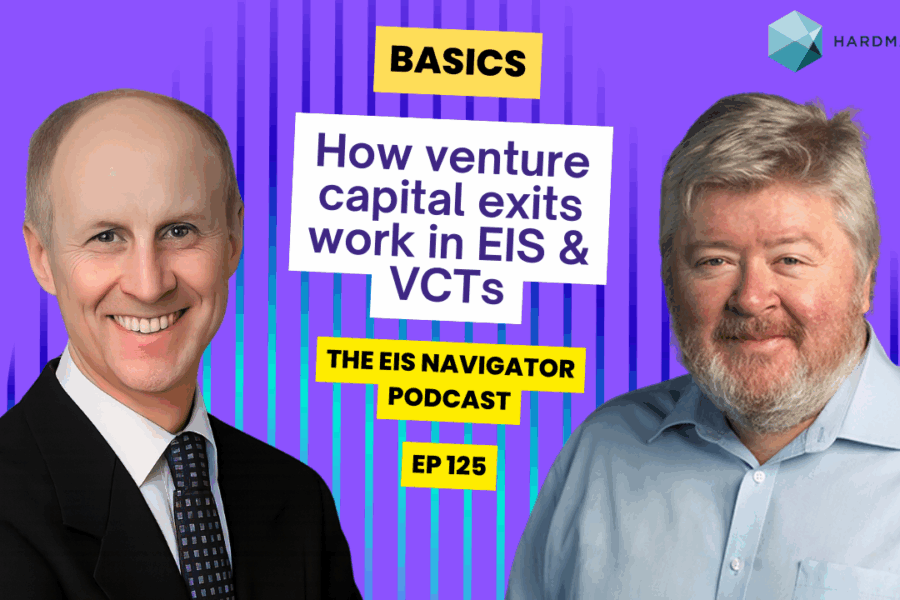
We discuss exits and why they matter to investors. Symvan Capital is building a track record of successful exits. Co-founder Kealan Doyle also has prior experience in capital markets so has lots of knowledge of the different kind of exits, as well as some of the wrinkles that investors need to watch out for.
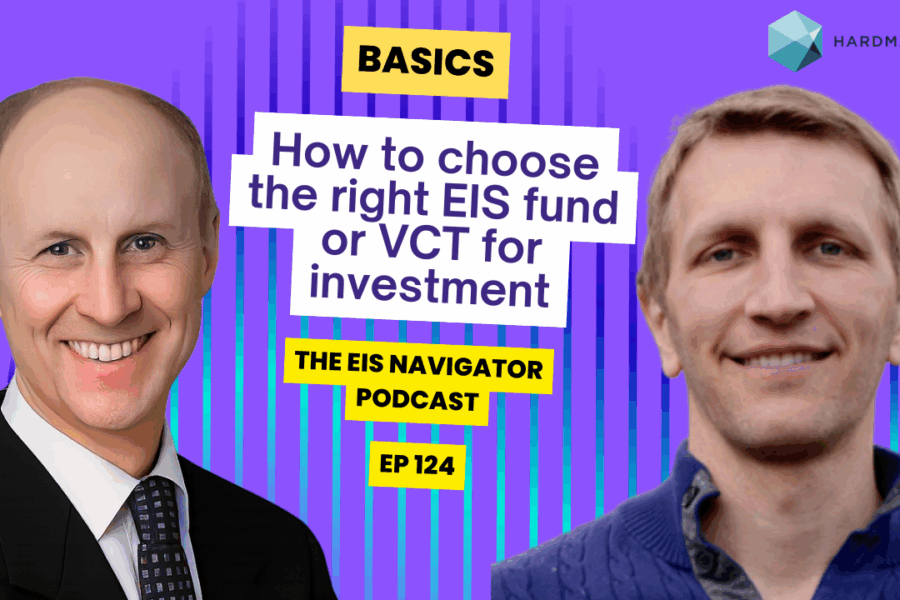
SyndicateRoom has moved into third-party management, so has good insight into how to pick a fund. Co-founder Tom Britton joins us to give his views on what investors need to look at and how.
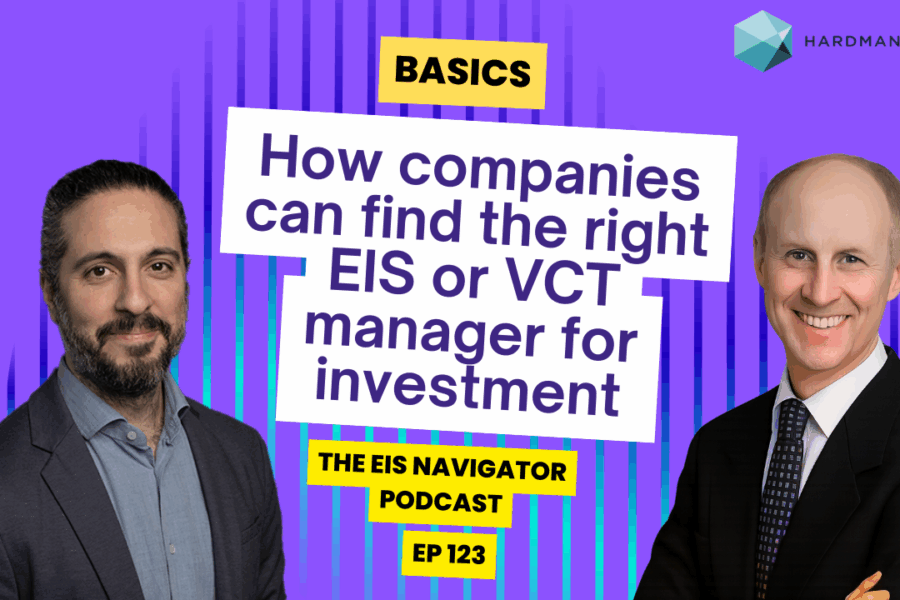
We discuss how companies can find the right EIS or VCT manager for investment. Symvan Capital has been investing through EIS for over a decade so has seen what happens when companies handle it well and badly. Investment Manager, Michael Theodosiou, talks us through the angles.
Calculus Capital manages products under EIS and VCT schemes, so its Head of Investor Relations, Francesca Rayneu, is ideally placed to discuss the arguments for both.
We discuss Knowledge Intensive EIS funds, sometimes called KI funds. These are still relatively new in the market, so it’s good to get a full explanation. Committed Capital have launched a few KI funds now, so we asked their Head of Business Development, Glen Stewart, on to explain them.
We discuss the tax reliefs for the Seed Enterprise Investment Scheme (SEIS). Despite only launching its first SEIS fund a few years ago, Haatch Ventures has been successful in attracting funds and, now, getting exits. Director Olivia Drinnan joins the podcast to explain everything.
In the fifth of the EIS and VC Basics mini-series for The EIS Navigator, we discuss the Seed Enterprise Investment Scheme (SEIS). Jenson Ventures is one of the longest-standing SEIS managers, and Jeffrey Faustin has been with them for over a decade so has lots of knowledge to share about the scheme.

Mercia manages the three Northern VCTs, so we asked their Head of Sales and Private Investor Relations, Paul Mattick, to come on and explain how they work. VCTs are the most popular of the tax advantaged schemes, so it’s great to get someone with such deep knowledge to explain the reliefs.
Foresight Group manage four VCTs, so we asked Nel Isaac to come on and explain what they are about. VCTs are the most popular of the tax advantaged schemes, so it’s great to get someone with such deep knowledge to give us a primer.
This episode explores the tax reliefs that are available on investments using the Enterprise Investment Scheme (EIS). For many investors, these are one of the main attractions of the scheme and the reliefs are amongst the most generous in the world.
An introduction to the Enterprise Investment Scheme (EIS) with Nic Pillow, Senior Ventures Manager at Blackfinch Ventures.
The Enterprise Investment Scheme (EIS) is a UK government programme, introduced over 30 years ago, that encourages private investment into early-stage, high-growth companies. It does this by offering tax reliefs to investors who buy new shares in small businesses. The aim is to help innovative companies raise funding while providing investors with exposure to a higher-risk asset class with the potential for significant returns. Read more about the Enterprise Investment Scheme on the HMRC website.
EIS investors can benefit from several key tax reliefs, including:
Income Tax Relief (30% on qualifying investments)
Capital Gains Deferral Relief
Loss Relief
Inheritance Tax Relief
Each of these has specific conditions, timeframes, and limits.
You must hold EIS shares for at least three years to retain the associated tax benefits. Selling or exiting before that period usually means the reliefs will be withdrawn.
Yes. EIS rules can be complex and personal tax situations vary. Professional financial advice is recommended to make sure you use the scheme appropriately for your circumstances.
A Venture Capital Trust is a company listed on the London Stock Exchange that invests in a wide range of young, high-growth UK businesses. It was created in 1995 to encourage investment into early-stage companies by offering tax incentives to investors.
VCTs invest mainly in small, high risk, UK based companies that meet specific qualifying rules. These include limits on company size, age, the number of employees and the amount of tax efficient funding a company can receive.
At least 80% must be invested in qualifying holdings. The remaining 20% can be held in cash or other liquid assets to manage running costs and liquidity.
Yes. A VCT can invest up to 15% of its assets in a single company. Each company can receive up to £5 million of tax efficient funding in a twelve month period, capped at 12 million over its lifetime.
EIS funds tend to back earlier stage businesses and rely on a few standout successes driving overall returns. VCTs usually hold a more balanced, diversified portfolio and place more emphasis on steady income through dividends.